


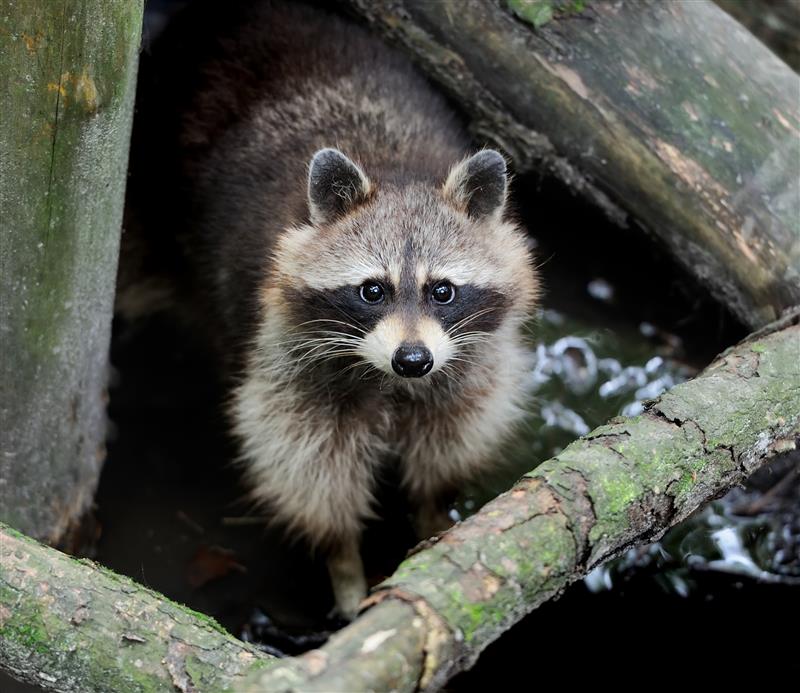
A protagonist as fascinating as it is misunderstood arrives this April at eco-bahia: the raccoon. A small mammal that inspires affection online thanks to its great intelligence and curiosity, while also posing significant challenges and opportunities when it comes to biodiversity conservation.
This species, scientifically known as Procyon lotor, is native to North America. Its natural habitat includes forests, wetlands, and areas close to bodies of water. It has an astonishing capacity for adaptation and versatility, allowing it to live in very different environments—a characteristic that highlights its resilience.
At eco-bahia, we invite you to read this article to learn more about this friendly animal, which is present in the territories where we work.
From an ecological perspective, the raccoon plays an important role in the environments it inhabits. It is an omnivorous and opportunistic species, which means it contributes to natural balance through seed dispersal and the control of populations of small invertebrates and vertebrates. Its exploratory behavior and varied diet make it an active participant within food webs. Understanding this role is key to addressing its presence from a scientific and responsible perspective.
Diet
Raccoons are omnivores, although their main dietary trait is being opportunistic scavengers. While their diet consists of plants, fruits, and small animals such as frogs and lizards, they quickly become accustomed to human-provided food if it is available. As they often live near bodies of water, raccoons typically wash their food before eating it.
Due to their high intelligence, ability to adapt to human presence, and opportunistic nature, raccoons can sometimes be considered a “problematic” species.
Usually solitary, raccoons can form family groups of up to five individuals, although males generally do not take part in caring for the young. Their average lifespan ranges from 5 to 7 years, though in some cases they can live beyond 12.
Thanks to their front paws, raccoons are capable of performing a wide range of actions and have strong problem-solving skills. They play a key role in nature by dispersing seeds, controlling pests, and acting as scavengers and predators. They are mainly nocturnal, so it is common to encounter them at the end of the day.
Actions Promoted by eco-bahia
Because raccoons are highly intelligent, feeding them intentionally can cause them to become accustomed to human food and stop searching for food on their own, relying instead on handouts and what they can scavenge from trash. They may be considered problematic when people feed them, as this can lead to negative behaviors such as biting or scratching.
To mitigate this imbalance, Fundación eco-bahia has carried out awareness-raising efforts with guests and staff to discourage feeding wildlife and to reduce nighttime driving speeds in order to lower the number of wildlife-vehicle collisions.
Our mission as a foundation is to protect, restore, and educate. We implement plans that promote research and collaboration with nature experts across our areas of operation.
In the field, we carry out thorough monitoring and tracking of wildlife, restore habitats, and promote social awareness as a fundamental pillar of environmental care. Learn more about us—we take actions that leave a lasting impact!


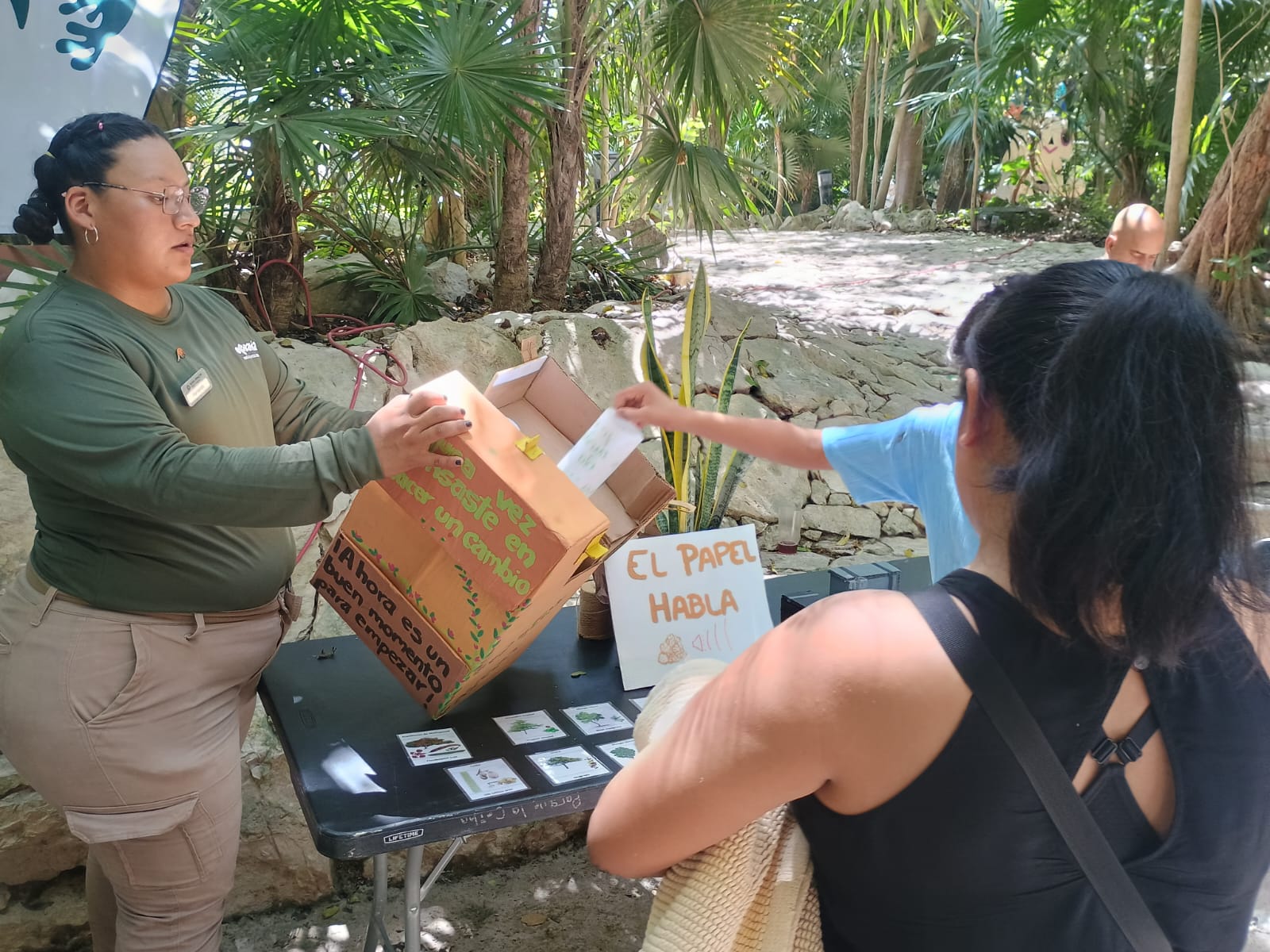
Recycled Paper Workshop in Playa del Carmen


Eco-Bahia Drives Marine Conservation in Riviera Maya